
(406) 206-7571
We are used to hearing plenty of chatter surrounding interest rates: Will they be raised? Be lowered? But behind those interest rate decisions is another integral part of monetary policy: bank reserves.
Bank reserves are funds that big commercial banks hold in accounts at the Federal Reserve. They are a key tool in influencing interest rates. Banks use these reserves to settle payments with one another and manage day-to-day cash needs. Think of it simply as the bank account for your bank.
Most of us don’t care to think about how many reserves a bank holds at the Federal Reserve. But we do care about what happens to interest rates and inflation.
How much cash is available in this system matters because reserves help the Fed maintain control over short-term interest rates. And these short-term interest rates eventually influence the borrowing costs that consumers and businesses see by impacting rates on credit cards, business loans, lines of credit, and other borrowing costs.
To understand how cash reserves influence interest rates, it is helpful to look at three different reserve environments: abundant, ample, and scarce.
An abundant reserves environment is exactly what it sounds like: banks collectively have substantially more reserves than they need to comfortably operate.
Imagine a bank already has far more available cash than it needs. Receiving another dollar is not going to meaningfully change much. Likewise, losing a relatively small amount probably will not cause much concern. This is what makes reserves abundant.
Following the Fed’s large asset purchases during the pandemic (a tactic to keep the economy afloat amid the shutdowns), trillions of dollars of reserves entered the banking system. With such a large cushion of liquidity, banks had little need to compete with one another for additional reserves.
This is where the connection to interest rates comes in.
When reserves are abundant, adding or removing small amounts of reserves has almost no effect on the rate banks charge each other for overnight loans, also known as the Fed Funds Rate. There is already so much cash available that banks do not need to offer significantly higher rates to get more of it. This keeps that fed funds rate stable and close to the rate the Federal Reserve would like to see. But it is important to remember that when there is more money to go around, there is more room for prices to rise.
Over the past several years, the Fed has reduced the enormous amount of excess liquidity created during the pandemic, an attempt to cool inflation. As reserves declined, the banking system moved from an abundant reserves framework to an ample reserves framework.
Ample reserves represent the middle ground. Banks still have enough cash to comfortably meet their needs, but they are no longer sitting on the enormous cushion that existed when reserves were abundant.
Another thing to note is that ample is not a specific dollar amount, think of it as more of a range.
When reserves are ample, there is still plenty of cash available, but every dollar begins to matter a little bit more. Small changes in the number of reserves may cause some movement in short-term rates, but not enough to interfere with the Fed’s control over interest rates.
This is essentially the Fed’s desired middle ground. Enough liquidity to keep the financial system functioning smoothly and short-term interest rates under control, without maintaining much more reserves than the banks need that could ultimately cause other problems.
If reserves were to fall below the ample range, the banking system would eventually become scarce.
The word “scarce” may sound alarming, but it doesn’t necessarily mean banks have run out of money. In fact, the United States operated with a scarce reserves framework before the 2008 financial crisis and it was not what led to the crisis.
Scarce simply means banks hold much smaller reserves relative to their liquidity needs.
With less cash sitting readily available at the Fed, banks must manage their reserves more carefully. A bank that needs additional reserves may need to borrow them from another institution.
And when more banks are competing for a smaller pool of available reserves, the price of borrowing that money, the interest rate, becomes much more sensitive to supply and demand.
Think of it this way: when reserves are abundant, another dollar barely matters.
When reserves are ample, another dollar matters somewhat, but banks still have plenty of available cash at their disposal.
When reserves are scarce, every dollar matters much more.
This is why relatively small changes in reserve supply can produce much larger movements in short-term interest rates when reserves are scarce.
The Fed has spent the past few years reducing the size of its balance sheet and removing some of the excess liquidity that entered the financial system during and after the pandemic.
By late 2025, the Fed determined that reserves had moved from abundant into ample range and stopped shrinking its balance sheet. Today, the Fed’s stated goal is to maintain ample reserves, not intentionally push them into scarcity or bring them back up to abundance.
The aim is to not drain as much cash from the banking system as possible. Instead, the Fed is trying to find the appropriate balance.
The Federal Reserve sets a target range for the federal funds rate. One of the Fed’s main tools for keeping that rate where it wants is the interest rate it pays banks on their reserve balances, also known as the interest rate on reserve balances or IORB.
When reserves are ample, the Fed can change the rate it pays on reserves and influence other short-term rates without having to constantly add or remove cash from the banking system.
But if reserves became too scarce, supply and demand would begin playing a much larger role. Banks needing cash could bid interest rates higher, making it more difficult for the Fed to keep rates where they want. This is why the amount of reserves matters; they help create the environment in which the Fed’s interest rate policy can do what it’s supposed to.
Abundant reserves can put upward pressure on inflation since there is more money available in the financial system. More money moving through the economy can lead to higher spending and higher prices. Over the past several years, we have seen very high reserve levels alongside higher inflation, increased government spending, and growing debt. While abundant reserves are not the sole cause of all these problems, it is a good reminder that more is not always better. We are encouraged to see the Fed moving away from the extremely high reserve levels of recent years towards a more balanced approach.
Hi everyone! This is my first time sending out an annual market review, and I am excited to share it with you all. As we leave 2025 and enter 2026, we all at CoCreate are feeling energized and hopeful for what’s to come.
Financial markets do not move in straight lines, and 2025 was no exception. While the year had its ups and downs, it also offered valuable lessons about patience and long-term thinking. In this review, we will take a closer look at the key events and major themes of the year, and what we believe matters most moving forward.
As we move into 2026, our focus remains on being thoughtful stewards of your investments. In a year shaped by uncertainty and change, we believe careful decision-making matters more than quick reactions. Markets will always react to headlines, but long-term success comes from staying grounded, patient, and intentional.
Rather than chasing trends, we emphasize diversifying your investments among businesses that are well run, have highly profitable goods and services that people want, and that pay you cash in return for your investment. This approach helps protect portfolios during periods of fluctuation while positioning them to grow over time.
At the end of the day, markets will continue to evolve, headlines will come and go, and uncertainty will always be part of investing. Our role is to help you stay grounded through it all by making thoughtful decisions, staying flexible when needed, and keeping your long-term goals in the center stage. By focusing on what we can control and being wary of what we cannot, we can look forward to the next year with clarity and confidence.
I have gone into more detail below and would be happy to answer any questions you may have.
I hope you have all had a wonderful close to your 2025, and I’m looking forward to meeting with you and having a great 2026 together.
- Emma Shaw
Inflation stayed in the spotlight throughout 2025 as investors and policymakers tried to figure out if rising prices were truly beginning to come under control. The most common way to track how quickly prices are increasing is by looking at the Consumer Price Index (CPI), which measures the cost of everyday items like food, gas, housing, and medical care. When CPI goes up, it means things are getting more expensive, and when CPI goes down, it means price increases are starting to slow.
At the start of 2025, CPI inflation was around 3%, which is higher than the Federal Reserve’s long-term goal of 2%. By the end of the first quarter, inflation cooled to around 2.4%, which was a positive sign that pricing pressures were starting to let up. However, progress was not linear, and CPI moved back up to roughly 2.7% by mid-year and hovered close to 3% again by early fall before going back down below 2.7%.
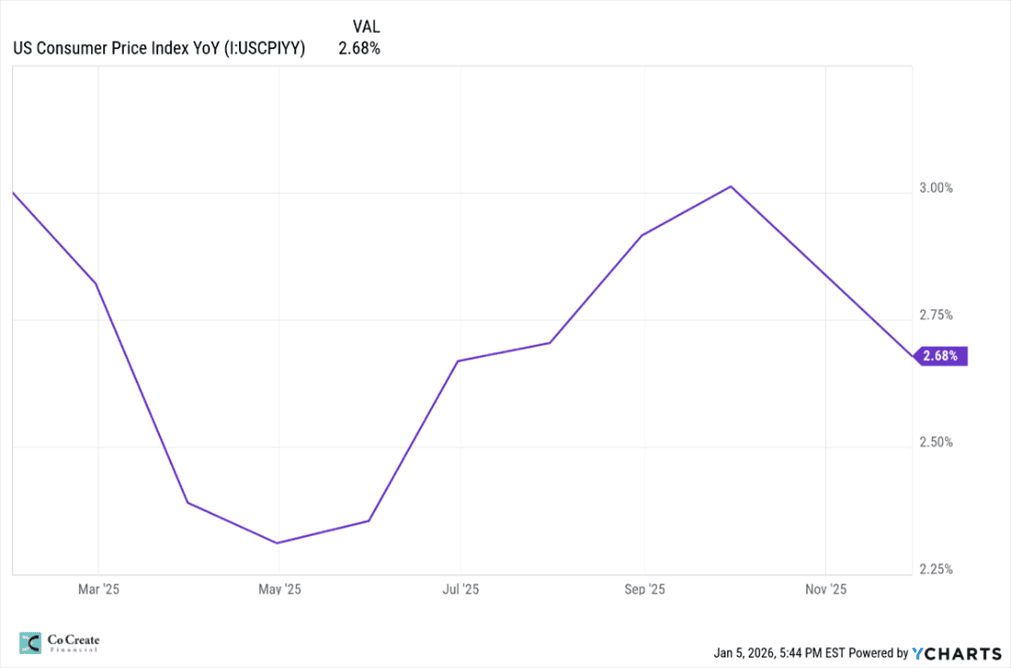
The graph above tracks CPI inflation over the course of the year. The line moving down means inflation is slowing, while the line moving up means inflation is picking back up. This back-and-forth pattern we can see explains why inflation continued to feel frustratingly “sticky,” even when some areas of the economy improved.
But the uneven path of inflation in 2025 is not a complete surprise, inflation rarely dissipates quickly, and expecting a smooth decline is not totally realistic. It’s normal for progress to stall or even reverse temporarily, especially when wages and housing costs remain elevated.
For investors, this backs up the importance of remaining patient and not overreacting to shorter-term data. The stabilization process is complex, made up of many various interlocking elements that move at different paces.
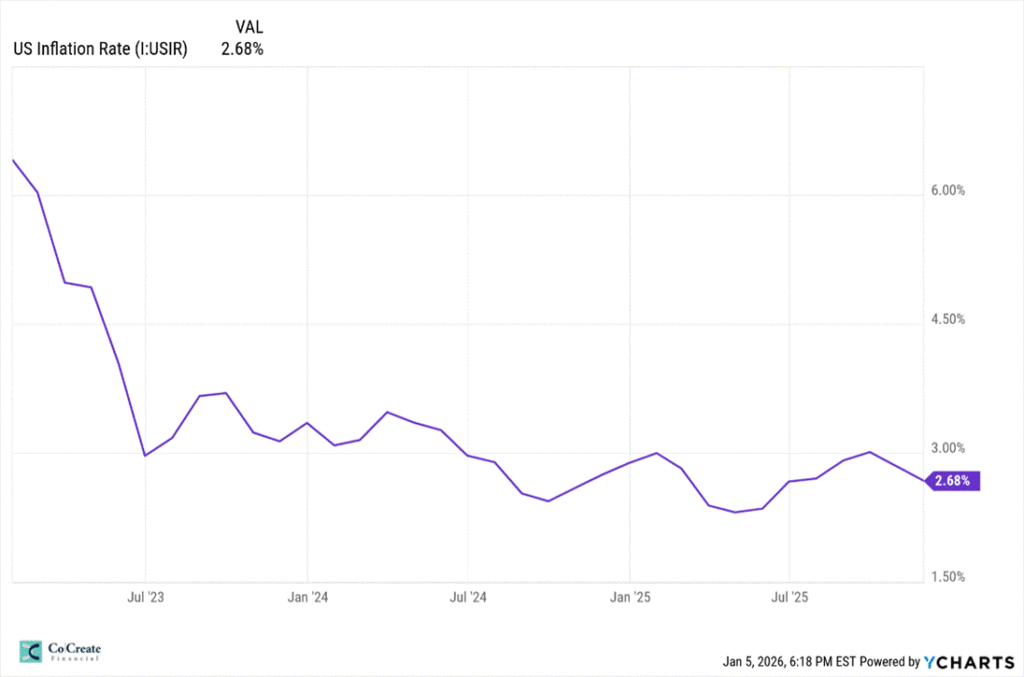
This graph depicts the U.S. inflation rate over the past three years. The broader trend still points towards gradual improvement, and we can navigate the uncertainty by remaining diversified, focusing on fundamentals, and avoiding emotional decisions based on fleeting headlines.
Throughout 2025, central banks, led by the Federal Reserve, took a cautious approach to interest rate decisions. After raising interest rates aggressively in prior years to fight inflation, policymakers shifted towards a slower, more thoughtful strategy.
Interest rates deal with the cost of borrowing money. When rates go up, loans become more expensive and spending tends to slow. When rates go down, loans become cheaper and spending increases. One of the Federal Reserve’s duties is to adjust rates to help keep inflation under control while also supporting economic growth.
Since inflation moved up and down during the year, expectations surrounding possible rate cuts were inconsistent. At times, investors expected rates to fall sooner, but when inflation readings came in higher, the Fed signaled it was willing to wait to make a move until they had a more complete picture.
Federal Reserve Chair Jerome Powell repeatedly emphasized that decisions would depend on clear progress in the data, not on what markets hoped would happen. The Fed needed tangible proof that inflation was improving.
On December 10, the Fed lowered interest rates by 25 basis points, which equals 0.25%. This was the third rate cut of the year. These small cuts suggest growing confidence that inflation is moving in the right direction, but again, these things take time and rate cuts do not bring change overnight.
Even as inflation started to cool, borrowing money remained expensive throughout much of 2025. Mortgage rates remained high, adding to the slower activity in the housing market and affecting affordability for buyers and refinancers. Higher monthly payments made homes less affordable, and fewer people chose to refinance their existing mortgages. This kept many buyers on the sidelines and reduced overall housing demand.
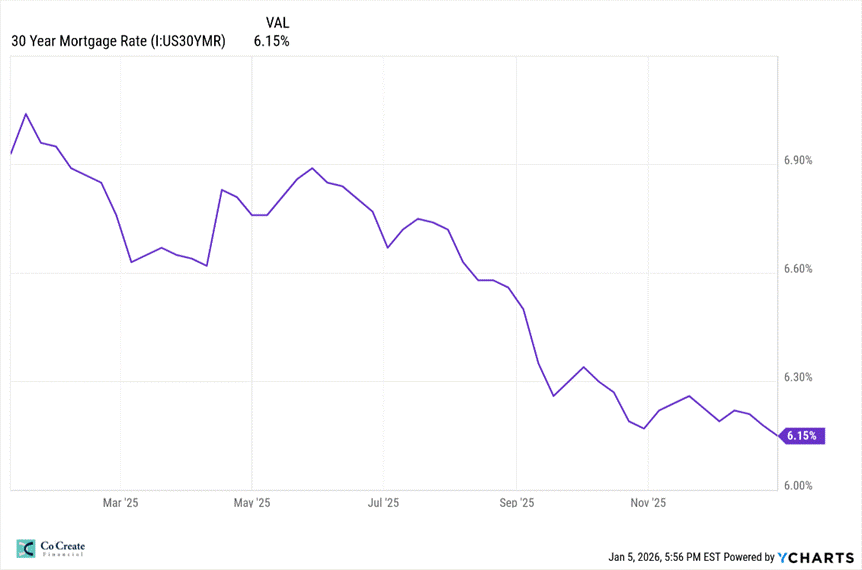
The chart above tracks the 30-year fixed mortgage rate, which is the most common home loan in the U.S. The line shows how mortgage rates moved throughout the year. When the line goes down, borrowing becomes slightly cheaper. When it stays high, monthly payments remain a challenge for buyers.
Although mortgage rates declined some towards the end of the year, they remained well above the low levels we’ve seen in other years, finishing around 6.15%. While this drop offered some relief, rates were still high enough to limit affordability for many households.
Higher interest rates also affected businesses. Companies faced higher financing costs, which made them more cautious about expanding, hiring, and investing in new projects. For consumers, borrowing became more expensive across credit cards, auto loans, and personal loans, making everyday purchases harder to finance and encouraging households to be more selective with spending.
Mortgage rates will take longer to come down, even if the Federal Reserve continues to cut interest rates. While rate cuts help lower short-term borrowing costs, mortgage rates are influenced by more than just Fed policy. Meaningful relief for homebuyers will require steady improvement in inflation and economic stability over time.
Interest rate movements had a broad impact on markets in 2025. Bond prices moved as rate expectations shifted. When interest rates stay high, existing bonds lose value, but new bonds offer higher yields, meaning better income potential going forward.
Stocks also experienced periods of volatility throughout the year. Higher interest rates make borrowing more expensive for companies and reduce the value of their future earnings, which can put pressure on stock prices. As investors adjusted to these conditions, markets reacted more sharply to economic data and rate expectations.
Despite short term swings, the higher-rate environment reinforced the importance of diversification. Balanced portfolios tended to perform more steadily, as income-generating assets played a larger role and helped offset equity volatility.
Economic growth in 2025 was more resilient than many early forecasts suggested. While higher interest rates were expected to significantly slow down activity, overall GDP growth remained positive, though more moderate than in prior years. GDP is a simple way to measure the health of the economy. It represents the total value of all goods and services produced in a country over a certain period. On the one hand, the U.S. economy continued to expand at a steady pace rather than experiencing any sharp contractions, showing its ability to adapt to tighter financial conditions. On the other hand, AI investment was responsible for approximately 92% of GDP growth in 2025 and tariffs appear to be costing about 1% of GDP.
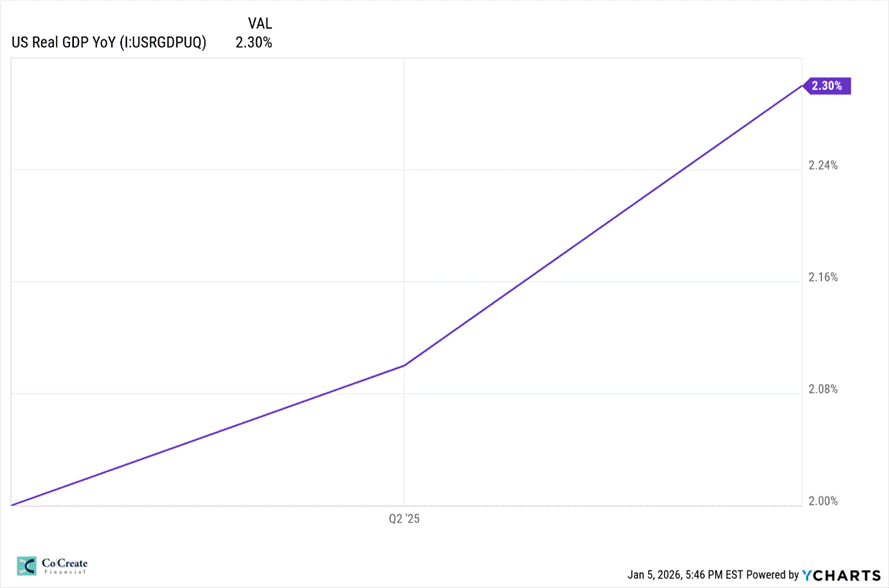
As we can see in the graph above, which measures U.S. GDP throughout 2025, the slower pace of growth suggests the economy is settling into a healthier balance. Instead of growing too fast or slowing down too much, businesses and consumers adjusted their spending and investment decisions at a more sustainable pace.
The job market remained relatively stable throughout the year, though hiring slowed compared to the rapid pace seen in recent years. According to the Bureau of Labor Statistics (BLS), total employment continued to grow, particularly in areas like health care and service-related jobs. The unemployment rate, which measures the number of people actively looking for work but unable to find it, edged slightly higher but remained near normal historical levels. This leads to a cooling job market rather than a major slowdown. As I’ve mentioned before, employers just became more selective with hiring as interest rates stayed high and economic growth softened. One notable change was a 9.2% decline in federal government employment, as hiring slowed and some government roles were reduced. This contributed to the overall deceleration of job growth.
Consumer spending in 2025 remained stronger than expected, despite the higher interest rates and prices that continued to impact people’s budgets. Solid employment and steady wage growth allowed many households to keep spending, especially on everyday needs, which helped support overall economic growth. However, when it came to discretionary purchases, consumers were much more cautious.
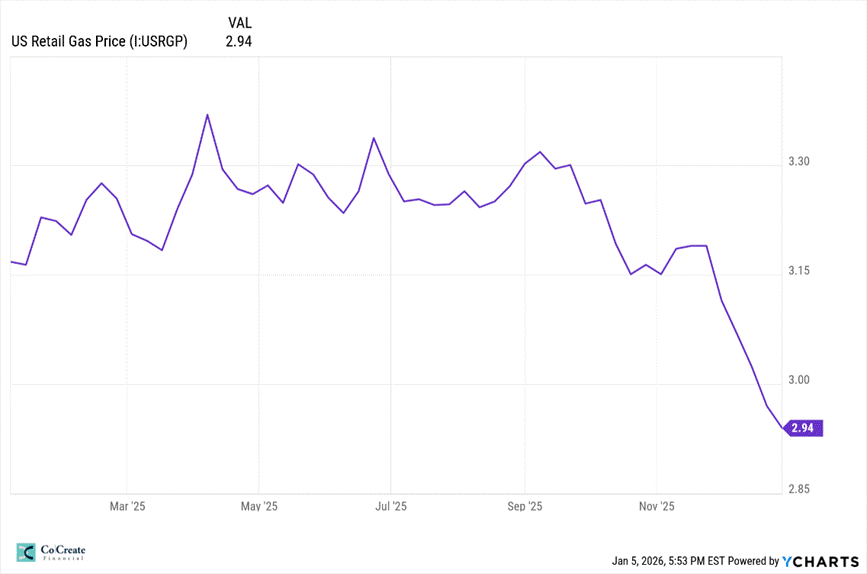
This U.S. Retail Gas Price graph highlights a positive for consumers, and a possible factor as to why people were able to keep spending. Gas prices fluctuated during the year but declined towards the end of 2025, finishing just under $3 per gallon. These lower gas prices could have helped free up budgets and allow for more spending elsewhere.
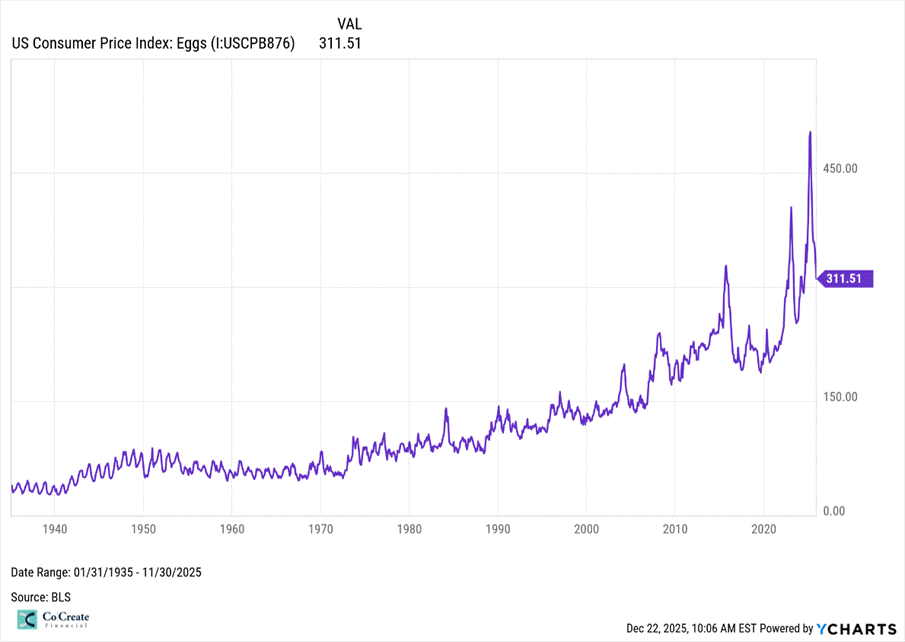
However, this long-term chart tracking egg prices tells a different story. While prices naturally rise over time due to inflation, the sharp increases in recent years stand out compared to historical trends. Eggs are a basic household staple, so rising prices here highlight how higher everyday costs have become more noticeable for consumers (if you’re spending $311 on eggs, you must be buying the Costco-size package).
Consumer spending in 2025 was less about excess and more about adaptation, which we’ve seen is a common theme in the overall market. Instead of cutting spending dramatically and abruptly, people adjusted how and where they spent their money. Lower fuel prices helped offset higher costs elsewhere but persistent increases in everyday items, like groceries, kept consumers cautious. From the start of the year, people felt a lot of hesitation as the economy sent mixed signals and pulled sentiment in different directions. Despite the concerns, the economy proved to be more resilient than many initially had expected.
2025 was a year of adjustment and adaptation. Market reactions were shaped by big policy shifts, political headlines, and changing expectations surrounding inflation and interest rates. While there were times of volatility, investors spent much of the year dealing with uncertainty and navigating the complex economic environment. Several key events and themes stood out and played a vital role in shaping market behavior.
In early April, on a day coined “Liberation Day”, the President announced broad tariffs on imported goods. The announcement triggered sharp and immediate market reactions, stocks fell quickly as investors tried to assess the potential impacts on inflation, global trade, and corporate profits.
As the year progressed, markets stabilized as people received more clarity about how the tariffs would be implemented and which industries would be most affected. While uncertainty remained during periods of negotiation, the initial shock faded as expectations adjusted.
Ongoing global trade tensions and the influx of new tariff policies added another layer of unpredictability. Rising trade barriers and high-profile negotiations influenced expectations for economic growth and international investment.
At times, discussions about scaling back harsher policies helped restore market sentiment, but renewed tensions would harm confidence once again. The shifting dynamics made long-term planning more difficult for businesses and investors.
Inflation continued to cool compared to prior years, but pricing pressures remained a central concern for investors, policymakers, and the everyday American. Even as progress was made, inflation did not drop quickly or smoothly.
Market reactions were often influenced more by headlines and policy signals than by long-term fundamentals, however this is not surprising nor rare. Short-term swings are natural, but the constant changes in policies emphasized the influence of these swings.
The rapid rise of artificial intelligence became a defining theme of 2025. Companies connected to AI saw massive increases in valuation as investors rushed to gain exposure to next “best” thing. Much of the AI investment came from the AI industry itself. We’ve discussed AI in previous articles and will be continuing to unpack the risks and opportunities.
But concerns about an “AI bubble” emerged, as people began to grow wary of the super high stock prices that did not seem to be in line with AI companies’ financial situation, leading to even more volatility within the industry. Moreover, there is an abundance of evidence that those implementing AI are NOT yet seeing a return on their investment.[1] We have been careful to limit our exposure to the risks of the AI industry throughout the year.
Fiscal policy remained a key theme in 2025, including changes to tax policy and ongoing debates over government spending.
New legislation extended and modified tax provisions for businesses and individuals, but the effects of “The One, Big, Beautiful Bill” were uneven across industries, with some sectors benefiting more than others.
The 43-day government shutdown that began in October 2025 and finally ended mid-November added to the ambiguity. While the shutdown was resolved, it brought even more short-term volatility and disrupted government services and personnel.
[1] https://mlq.ai/media/quarterly_decks/v0.1_State_of_AI_in_Business_2025_Report.pdf;
CFO Outlook for 2026: Tariffs, Hiring, Prices, and AI Impact | Richmond Fed
Update to original article: August 1, 2025
Since publishing this update, there have been several key developments that may affect our conclusions.
We are taking a conscientious and data-informed approach as we manage your investments. We aren’t particularly surprised by much of this news as it’s consistent with our thesis from the beginning of the Trump tariff discussion. We are confident that our dividend-driven approach to investment will be the most resilient approach to the diverse range of outcomes. If you have questions, please feel free to reach out.
[1] https://www.bls.gov/news.release/archives/empsit_08012025.pdf
[2] 2024 Preliminary Benchmark Revision : U.S. Bureau of Labor Statistics
Forward by Matt Hudak, Financial Advisor
Speaking on behalf of our whole team, we’ve been incredibly blessed to have Emma join us for the summer as an intern. We’re even more excited that she is now a permanent part of your CoCreate crew. Christa and I have spent a considerable amount of time working with her as she’s been jumping into a variety of financial planning and portfolio management tasks. She’s been extremely adept at learning new skills quickly, and her contributions have been impressive to say the least. She’s brilliant, fun and a great conversationalist. When you get to know her, you’ll be as grateful as we are to have her on your team.
It’s been a while since we published a “playbook” article, and we’re happy that the whiplash from earlier this year has slowed down quite a bit. We thought it would be good to share an update with you as we approach August. Call it a celebration of Emma’s onboarding (though it might seem like hazing to some of you), we thought it would be a phenomenal opportunity for you to hear from Emma. I hope you enjoy this missive, and reach out to Emma with your thoughts, questions, and congratulations.
Matt
__________________________________________________________________________
What’s Happening with Tariffs?
Despite ongoing uncertainty around tariff proposals and international trade agreements, there have been a few notable developments, including the agreement with the EU that was reached over the weekend. The administration is actively engaged in negotiations with key trading partners like China. While no sweeping changes have gone into effect yet, the potential for new tariffs has introduced short-term market uncertainty.
Tariffs are taxes placed on imported goods. The company exporting goods pays this tax, but it is often the consumer who feels the cost of them. Tariffs are usually structured as a percentage of the value of the imported product, known as ad valorem, however, they can also have a specific fixed fee which is based on quantity. For example, a 15% ad valorem tariff applied to a car valued at $50,000 would cost an additional $7,500. If the tariff was specific, it would be a fixed fee regardless of price. If the specific tariff was $5,000 per imported car, the added cost would remain $5,000 regardless of if the car was valued at $30,000 or $100,000. The impacts of tariffs can be broad, they can significantly affect domestic industries, consumer prices, and international trade relationships.
If tariffs are raised, it could mean higher costs for U.S. businesses and consumers. On the other hand, if tariffs are reduced or continue to be postponed, it could ease inflationary pressure and support growth in trade sensitive sectors.
But if tariffs are inflationary, why may the administration want to impose them? Understanding the administration’s priorities is critical. The President has emphasized his commitment to America First policies that prioritize domestic industries, job creation, and economic resilience. Tariffs, even if they may drive-up short-term costs, are seen by the administration as a strategy to counteract unfair trade practices, resolve social and geopolitical issues and protect the American worker. Tariffs could also be used to bring trading partners to the negotiating table, creating more urgency to strike better deals. They send a signal that the U.S. is willing to take assertive steps unless changes are made, turning economic pressure into diplomatic motivation.
Here are a few highlights of recent trade activity:
How is the Economy Holding up?
Despite policy uncertainty and shifting global conditions, the U.S. economy has shown resilience in the first half of 2025. While Q1 GDP declined by 0.5%, more recent data signals a comeback. The Federal Reserve Bank of Atlanta estimates a 2.4% growth for the second quarter of 2025, pointing towards renewed economic forces. However, it’s important to note that this data does not reflect tariff policies yet, we will have to wait for the third and fourth quarter of 2025 to receive more accurate information. Our team will be watching and adapting along the way.
The labor market remains stable, with unemployment going down from 4.2% in May to 4.1% in June. Meanwhile, inflation continues to rise moderately, with June’s annual rate coming in at 2.7%; this is slightly above the Fed’s 2% target, but consistent with long-term historical averages.
The Fed has not yet confirmed a rate cut, but some economists believe it could happen as early as September if inflation continues to cool and growth remains steady. While I agree that a rate cut in September is a possibility, there are a number of factors that could delay this. Those include tariff agreements, unemployment, and inflation (which hasn’t cooled enough yet). For these reasons, it would be unwise to bank on the Federal Reserve reducing rates this fall. A rate cut would make borrowing cheaper for businesses and consumers, potentially boosting investment and spending. However, if inflation remains sticky or trade tensions worsen, the Fed may hold off cutting rates to avoid stirring pricing pressures. Either scenario highlights the importance of staying adaptable and focusing on long-term strategy rather than reacting to short-term shifts.
What Does this All Mean?
At first glance, it can feel like the economy is on shaky ground. Headlines and social media posts often highlight volatility, rising costs, and political tension, making it seem like we’re on the edge of major market disruptions. But when you zoom out and look at the full picture, the U.S. economy continues to demonstrate resilience and adaptability.
Inflation has cooled to 2.7% as of June, and while it’s still above the Federal Reserve’s 2% target, it reflects some progress from the peaks of recent years. The Fed’s Beige Book (leave it to bankers to be creative) also noted a modest increase in economic activity, especially from late May to early July, signaling that consumer demand and business investment remain strong despite ongoing uncertainty and caution. The labor market has held steady, and many sectors have continued to grow at a slow but stable pace.
In short, although concerns around inflation, interest rates, and trade policy remain at the forefront of our minds, the underlying economic data tells a more balanced story. It appears that the U.S. economy is not stalling but instead adjusting. Both businesses and consumers are moving forward with caution, not panic.
What are some Possible Outcomes?
From here, there is a variety of directions things could go:
Our Strategy
Rather than trying to guess the outcomes, we focus on preparation instead of reactivity. Our investment approach is built around adaptability, diversification, and long-term durability. We’ve thoughtfully assessed a range of potential outcomes, from policy shifts to economic changes, and positioned your investment portfolio to remain resilient no matter the direction the market takes. Our approach is investing in individual businesses, and we evaluate those on an extremely regular basis. We consider each company’s exposure to individual policies and scenarios, we measure how frequently the price changes of each investment move with one another to ensure we have adequate diversification, and we make sure we have plenty of cashflow to weather any storm.
Of course, we can’t predict with certainty what will happen in the future, but we can prepare with intention. By building a well-diversified, resilient portfolio and staying focused on rising dividend income and your long-term goals, we can navigate uncertainty with confidence. We prioritize making thoughtful, forward-looking decisions that help protect and grow your investments over time.
The American economy has endured through countless shifts and unpredictability. But it’s natural to be wary of shifting policies, and it is important for us to stay vigilant so we can continue to provide you with peace of mind during these times. The ability for the economy to demonstrate resilience and stability, especially amidst near-term risks and unknowns, is a good sign.
The stock market volatility followed by the announcement of “Liberation Day” has leveled out, possibly signaling a broader sentiment shift. Either people are growing tired of the constant swings and are responding less actively, or the economic conditions are more unpredictable than most people expected last November. Either way, there has been a noticeable slowdown in policy change and subsequent reactions during recent weeks.
I’d also like to note that we’ve completed our review of the Big Beautiful Bill and look forward to sharing our insights and discussing its potential impacts in greater detail in the near future in another blog post. Additionally, we do not anticipate any changes in leadership at the Federal Reserve. Jerome Powell only has a year left in his term and it’s unnecessary for Trump to fight against that.
Uncertainty is a normal part of the market cycle, and we’ve gone through these ambiguous periods before. What matters most is having a plan that’s built to adapt, not just to the good times, but to the unpredictable ones too. We want you to remember that we’re looking at your accounts carefully and consistently and are available to answer any questions that you have along the way. We’re confident that all your accounts are positioned in the best possible structure so that they’ll hold up in a downturn and be poised for growth.
